
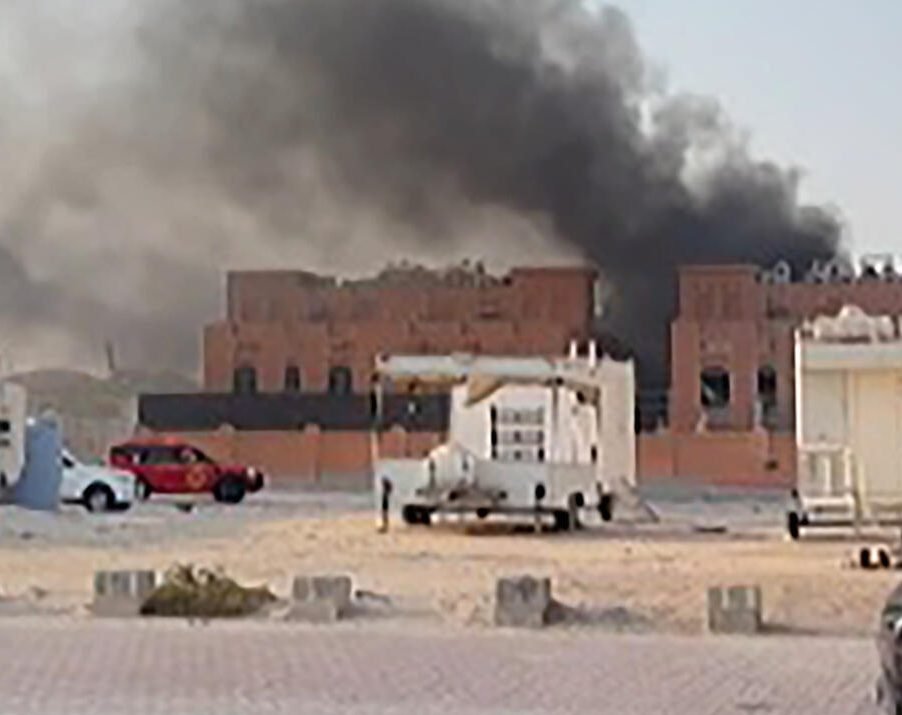
On September 9, 2025, Israel executed an unprecedented airstrike codenamed Pisgat HaEsh (“Summit of Fire”) in Doha’s Legtaifiya district, marking the first confirmed Israeli military action on Qatari soil. The operation involved 15 Israeli fighter jets deploying over 10 munitions in rapid succession, targeting a residential compound housing the Hamas political bureau headquarters. Despite the scale of the operation, senior Hamas leaders, including chief negotiator Khalil al-Hayya, survived, though six individuals perished: five Hamas members, including al-Hayya’s son Humam and office director Jihad Abu Labal, along with a Qatari internal security officer.
The timing proved particularly inflammatory, occurring while Hamas representatives were deliberating President Trump’s proposed ceasefire framework in the same compound. This three-phase plan envisioned the immediate release of 48 Israeli hostages within 48 hours of a 60-day truce, followed by prisoner exchanges and negotiations for permanent cessation of hostilities. Israel’s military action during these deliberations effectively sabotaged the diplomatic process, leading Hamas to characterise the proposal as insincere.
International Condemnation and Diplomatic Fallout
The strike triggered immediate and widespread international condemnation, fundamentally altering regional diplomatic dynamics. Qatar denounced the assault as “state terrorism” and a “cowardly criminal attack,” constituting a “blatant violation of international law”. UN Secretary-General António Guterres characterised it as a “flagrant violation” of Qatar’s sovereignty and territorial integrity.
Regional responses were swift and unified in their condemnation. Saudi Arabia’s Crown Prince Mohammed bin Salman personally called Qatar’s Emir to offer “full support,” with the kingdom “deploying all its capabilities” to protect Qatar’s sovereignty. The UAE, despite being a signatory to the Abraham Accords, labelled the attack “treacherous” and reaffirmed “complete solidarity with Qatar”. Turkey condemned the action as evidence of Israel’s adoption of “terrorism as a state policy,” while Egypt described it as undermining de-escalation efforts.
Significantly, President Trump expressed dissatisfaction with the operation, stating he was “not thrilled about the whole situation” and “very unhappy” with the strike on a key U.S. ally. The White House characterised the action as unilateral, noting it “does not advance Israel or America’s goals”. This rare public rebuke from Israel’s closest ally underscores the diplomatic costs of the operation.
This development followed heightened regional tensions, including solidarity visits from leaders of Jordan, Saudi Arabia, the United Arab Emirates, and Pakistan. Qatari Prime Minister and Minister of Foreign Affairs Sheikh Mohammed bin Abdulrahman bin Jassim Al Thani announced that an Arab-Islamic summit will be convened in Doha soon, most likely on September 15, 2015, to formulate a collective response strategy aimed at deterring further Israeli actions.
Impact on Ceasefire Negotiations and Mediation
The strike’s most immediate consequence was Qatar’s suspension of its mediation role, effectively paralysing ceasefire negotiations. Initially, Qatar informed the Trump administration of its intention to temporarily halt mediation efforts, though U.S. pressure subsequently persuaded Doha to reverse this decision. However, Qatar’s Prime Minister Mohammed bin Abdulrahman Al Thani later confirmed that the country would continue its mediation role despite the attack.
The incident has fundamentally undermined trust in the negotiation process. As one diplomatic source noted, Qatar’s risk tolerance has been “severely tested” by Israel’s bold daytime attack on its territory. Unlike previous mediation suspensions driven by parties’ intransigence, this suspension stems from serious security concerns and sovereignty violations. The prospects for meaningful ceasefire negotiations remain significantly diminished, with Egypt potentially replacing Qatar as the primary mediator.
Abraham Accords Under Strain
The Doha strike has placed unprecedented strain on the Abraham Accords, the 2020 normalisation agreements between Israel and several Arab states. The UAE’s strong condemnation, despite its diplomatic ties with Israel, signals growing tensions within the framework. Recent warnings from the UAE that it would “suspend or withdraw” from normalisation if Israel annexed significant portions of the West Bank demonstrate the fragility of these agreements.
Saudi Arabia’s response is particularly significant given ongoing discussions about potential normalisation. The kingdom’s robust defence of Qatar and condemnation of Israeli actions likely postpones any prospects for Saudi-Israeli normalisation. The unified Gulf response reflects broader concerns about Israeli actions threatening regional stability and sovereignty principles.
India’s Measured Response and Strategic Calculations
India’s response exemplified its strategic autonomy approach to Middle Eastern conflicts. The Ministry of External Affairs expressed “deep concern” over the strikes and their impact on regional security while urging “restraint and diplomacy”. Notably, India avoided explicit condemnation of Israel while emphasising the need for peaceful conflict resolution.
This balanced approach reflects India’s complex strategic considerations. India maintains robust defence and technology partnerships with Israel while simultaneously depending on Qatar for approximately 40% of its LNG needs. Qatar serves as India’s largest LNG supplier, with a long-term deal signed in February 2024 for 7.5 million tonnes annually until 2048. Any disruption to this relationship could have a significant impact on India’s energy security and economic stability.
The welfare of India’s 9 million Gulf expatriates, including substantial numbers in Qatar, adds a humanitarian dimension to India’s calculations. Annual remittances from the Gulf region exceed $40 billion, making regional stability crucial for India’s economy. The incident potentially complicates India’s integration into frameworks like the India-Middle East-Europe Economic Corridor (IMEC), which relies on regional cooperation and stability.
The strike’s economic ramifications extend beyond immediate diplomatic fallout. For India, any escalation affecting Qatar could disrupt critical energy supplies, potentially leading to increased import costs, fuel inflation, and pressure on the rupee. India’s bilateral trade with Qatar reached $14.14 billion in 2024-25, making stability crucial for economic relations.
Globally, the incident contributes to oil price volatility and supply chain uncertainties. The potential for a broader regional escalation involving energy infrastructure, particularly in the Strait of Hormuz, could have a severe impact on global energy markets. India’s strategic petroleum reserves and energy diversification efforts become increasingly critical in this context.
Regional Security Architecture and Future Implications
The Doha strike represents a fundamental challenge to the regional security architecture. By attacking a major U.S. ally and key mediator, Israel has demonstrated a willingness to prioritise military objectives over diplomatic relationships. This approach risks further destabilising an already volatile region and undermining the rules-based international order.
The incident’s timing, coinciding with renewed ceasefire discussions, suggests Israeli prioritisation of conflict prolongation over hostage recovery. Internal Israeli dissent, including criticism from media outlets such as Haaretz and security sources questioning the operation’s efficacy, suggests domestic concerns about the wisdom of the strategy.
The Israeli operation in Qatar has:
-
Shattered ceasefire prospects by destroying Qatar’s mediator credibility and Hamas’s faith in diplomatic processes
-
Strained the Abraham Accords through unified Arab condemnation and threats of normalisation suspension
-
Challenged U.S. regional strategy by forcing Washington to publicly rebuke its closest Middle Eastern ally
-
Undermined sovereignty principles that underpin international law and regional stability
-
Complicated India’s strategic positioning by threatening key energy partnerships while preserving Israeli ties
The incident highlights the fragility of diplomatic initiatives in conflict zones and the devastating consequences of prioritising military action over negotiated solutions. As regional tensions escalate and international frameworks strain under pressure, the need for renewed commitment to sovereignty, diplomacy, and multilateral cooperation becomes increasingly urgent. The long-term implications of this unprecedented escalation will likely reshape Middle Eastern geopolitics for years to come.

Informative eye -opener analytical
Masterpiece