
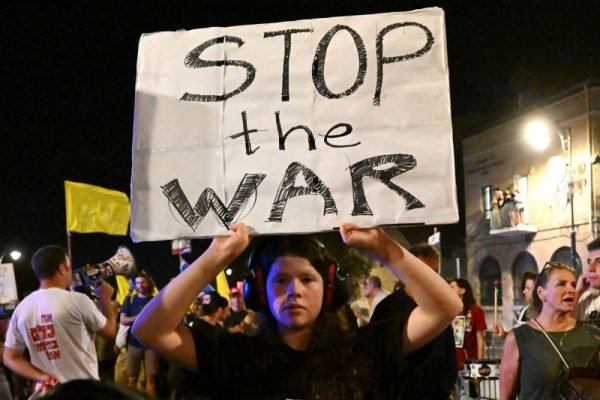
The seemingly interminable war in Gaza, now a protracted and devastating conflict, has reached a critical inflexion point. Beyond the shattered landscapes and the staggering human toll, a powerful and unified global chorus has emerged, its message unequivocal: the war must end now. This demand is no longer confined to the traditional corridors of diplomacy but reverberates through grassroots movements, academic halls, and the shifting foreign policies of even the most steadfast allies of the United States. Israel, once insulated by a robust US-led security umbrella, finds itself increasingly isolated, politically and socially. The surge in international recognition for a Palestinian state, coupled with the fracturing of the post-World War II regional order, signals a paradigm shift.
The sheer scale of the humanitarian crisis has been a primary catalyst for this global shift. After years of relentless bombardment and a crippling siege, Gaza is a landscape of near-total destruction. United Nations agencies have long since exhausted the lexicon of alarm, with reports consistently depicting a territory ravaged by famine, the collapse of its healthcare system, and a civilian death toll that defies comprehension. This man-made disaster, broadcast in real-time, has stripped away any ambiguity about the cost of the conflict. The diplomatic paralysis at the UN Security Council, marked by repeated US vetoes of ceasefire resolutions, has only intensified international frustration, creating a perception of a superpower shielding a client state from accountability and undermining international law itself. This stalemate has been further challenged by the International Court of Justice (ICJ) and the International Criminal Court (ICC), whose actions have added powerful legal and moral weight to the calls for an immediate cessation of hostilities.
This moral outrage has translated into tangible diplomatic isolation for Israel on a scale not seen in its history. A striking example occurred at the UN Security Council, where the US exercised its veto power for the sixth time to block a ceasefire resolution; the 14 other members all voted in favour, leaving the United States utterly alone. This isolation extends beyond procedural votes. Twenty-five nations, including traditional Israeli allies like the United Kingdom, France, Australia, and Japan, issued a joint statement declaring that the war “must end now,” condemning “the drip feeding of aid and the inhumane killing of civilians.” A key indicator of this trend is the accelerating recognition of Palestinian statehood. As of September 2025, 157 of 193 UN member states recognise Palestine, with 20 new recognitions since the war’s onset. The decisions by key Western powers to formally recognise Palestine represent a fundamental rejection of the long-failed peace process paradigm and a deliberate effort to create a political horizon for a two-state solution. The European Union is now openly considering sanctions, a move previously unthinkable.
This top-down political pressure is mirrored and amplified by a powerful bottom-up movement. From London to Washington, massive and sustained public protests demonstrate a deep and widespread revulsion at the ongoing violence. This sentiment is backed by hard data: a June 2025 Pew Research poll found unfavourable views of Israel in 20 of 24 nations surveyed. Sympathy in the US has fallen to a 25-year low, while European favourability ratings have hit their lowest levels on record. This grassroots activism, particularly strong among younger demographics, has created a domestic political cost for leaders in Western democracies, making unconditional support for the war effort politically untenable. The Boycott, Divestment, and Sanctions (BDS) movement has gained unprecedented traction, with academic boycotts and consumer pressure forcing multinational corporations to re-evaluate their ties to the conflict.
Perhaps the most significant long-term consequence is the visible breakdown of the US-led security architecture that has governed the Middle East since the end of World War II. The conflict has rendered the Abraham Accords all but defunct, freezing relations between Israel and its new Arab partners. This has created a strategic vacuum, prompting regional heavyweights like Saudi Arabia and Egypt to adopt more independent foreign policies and seek alternatives to US security guarantees, evidenced by the landmark Pakistan-Saudi defence pact. The security umbrella that once gave Israel immense freedom of action is now tattered, and the very foundations of the regional order are being redrawn.
Into this volatile landscape, new diplomatic overtures are emerging. A 21-point plan presented by Donald Trump to Arab leaders emphasises a permanent ceasefire, an Arab-led peacekeeping force, and Hamas’s exclusion from governance. While the willingness of Arab leaders to engage signifies a desperate search for a new approach, the obstacles were immediately apparent. The Israeli Prime Minister’s office sharply rejected any proposal involving international forces, with Benjamin Netanyahu vowing that “a Palestinian state will not be established west of the Jordan River.” In a sign of the shifting dynamics, however, the Arab League took the unprecedented step of urging Hamas to relinquish control over Gaza and disarm, demonstrating that pressure for a resolution now extends to all parties.
What makes this moment unique is the remarkable convergence of diverse interests—humanitarian, diplomatic, public, and strategic—all pushing to end the conflict. The traditional framework of balanced responses has given way to clear moral positions and concrete demands. The message from the international community is unequivocal: the Gaza war has lost whatever legitimacy it may have once possessed. This collective will represents perhaps the strongest pressure for peace that any modern conflict has generated. The question is no longer whether world opinion supports ending the war—it overwhelmingly does—but whether political leaders will finally respond to this clear moral and strategic imperative.
