The handling of Yemen’s Houthis further illustrates the growing divide. In May 2025, Trump announced a ceasefire with the Houthis, mediated by Oman, halting U.S. airstrikes after they agreed to stop targeting U.S. vessels. Israeli officials were surprised, learning of the deal only after its announcement, despite a recent attack on Tel Aviv’s Ben Gurion Airport. Israel was excluded from the truce, effectively ignoring continued Houthi attacks on its territory, prompting Netanyahu’s declaration: “Israel will defend itself by itself.” U.S. Ambassador Mike Huckabee’s comment that the U.S. “isn’t required to get permission from Israel” underscored the divergence.
Perhaps the most explosive divergence centres on Iran’s nuclear ambitions. The U.S. seeks a swift negotiated settlement that may allow Iran limited uranium enrichment for civilian purposes. Trump believes Iran’s weakened state creates a window of opportunity for diplomacy, with his Special Envoy to the Middle East, Steve Witkoff, engaging Tehran directly. Arab countries also favour diplomacy over military action.
Israel, however, demands the complete dismantlement of Iran’s nuclear infrastructure and opposes any enrichment capability. Netanyahu, convinced that diplomacy emboldens Tehran, has threatened unilateral military strikes. Israeli officials fear Trump’s urgency will result in a flawed deal, ignoring Iran’s ballistic missiles and proxy networks. Netanyahu warned, “A bad deal is worse than no deal.”
Trump reportedly cautioned Netanyahu against unilateral Israeli military action targeting Iran while U.S. negotiations were underway, deeming it “very inappropriate,” and sidelined hawkish advisors like former National Security Adviser Mike Waltz, perceived as too aligned with Netanyahu’s military options.
The Gaza conflict has become a litmus test for these tensions. Netanyahu, constrained by a fragile far-right coalition and his own precarious political and legal standing, has pursued prolonged military engagement, discussing indefinite Israeli security control over Gaza and alluding to the “voluntary emigration” of Palestinians. This initially resonated with Trump’s controversial suggestions of the U.S. “taking ownership” of Gaza for redevelopment, potentially involving population displacement.
However, mounting international condemnation and a deepening humanitarian crisis in Gaza (with over 50,000 deaths and images of starving children) led the Trump administration to shift its public emphasis toward an immediate ceasefire, hostage release, and humanitarian aid. The U.S. pressed Israel to unblock aid, with Trump instructing aides to tell Netanyahu to “wrap it up.”
Despite U.S. pressure, Netanyahu escalated operations, approving plans to “conquer and hold” Gaza and blocking aid as “pressure leverage.” This created a clear disconnect. Trump was reportedly frustrated by Netanyahu’s failure to articulate a viable long-term solution for Gaza or to de-escalate in a way conducive to U.S. engagement with Gulf Arab states. Trump’s direct negotiations with Hamas, securing the release of American-Israeli hostage Edan Alexander through Qatari mediation, bypassed Israeli channels, adding further friction. Meanwhile, the Gulf countries urged Trump to pressure Israel into a ceasefire and discussions on a two-state solution based on the principles of the 2002 Arab Peace Initiative.
Further straining relations, Trump lifted sanctions on Syria during his Middle East tour at the behest of Saudi Arabia and Turkey, despite Netanyahu’s requests to maintain them. Trump also praised Turkish President Recep Tayyip Erdoğan’s Syria policies, adding to Netanyahu’s unease.
Economically, in April 2025, Trump imposed 17% tariffs on Israeli imports, citing U.S. interests and aid costs; Netanyahu’s pre-emptive revocation of duties on U.S. goods failed to secure reciprocity. With the 2016 U.S.-Israel Memorandum of Understanding (providing $4 billion annually) expiring during Trump’s term, Israeli officials worry he may demand concessions for renewal, especially given his criticism of foreign aid.
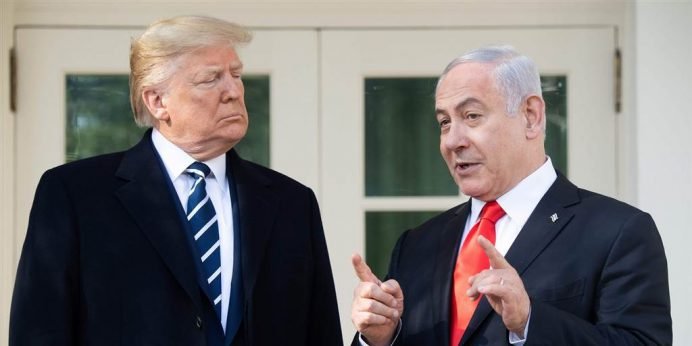
Beyond policy, personal and political factors have exacerbated these strains. While both leaders publicly maintain their partnership for domestic reasons, confrontations have reportedly become more frequent. Netanyahu has privately expressed dissatisfaction with Trump’s policy shifts, while Trump is frustrated with Netanyahu’s inflexibility on issues critical to U.S. regional strategy.
In Israel, Netanyahu faces immense domestic pressure, with over 70% reportedly wanting his resignation. According to a 2025 Pew Research Centre survey, only 41% of Americans aged 18–29 have a favourable view of Israel, compared to 69% of those aged 65 and older. Overall, 53% of U.S. adults now view Israel unfavourably, with younger generations driving this shift. Another poll indicated that 39% of Republican voters believe U.S. policy is too one-sided toward Israel, suggesting shifting sentiments. There is a growing view within the U.S. administration that Netanyahu has become a liability to U.S. global interests.
The implications of this deepening rift are significant. The nature of U.S.-Israel relations could undergo a fundamental transformation, evolving from an almost unconditional alliance to a more transactional, interest-based partnership. Regionally, U.S. diplomatic overtures towards Iran might succeed in de-escalating certain flashpoints. However, the absence of a cohesive and unified U.S.-Israeli strategy for Gaza and the broader Israeli-Palestinian conflict risks perpetuating instability and violence.
For Netanyahu, the cooling relationship with Washington compounds his international isolation and domestic woes, significantly eroding his carefully cultivated image as “Mr. Security.” For Trump, the divergence reflects the consistent application of his “America First” doctrine, prioritising deal-making and perceived U.S. national interests, even at the expense of traditional allegiances. The coming months will test whether these two leaders can bridge their considerable differences or if the once-vaunted alliance will continue to fray, potentially causing lasting consequences for regional stability and global diplomacy.


A paradigm shift in the US policy to lift major sanctions on Syria leading to recovery and reconstruction efforts definitely points to a reset in the Middle East. That said, the strained relations between the US and Israel, Trump’s America First push and Netanyahu’s declining popularity does seem to suggest that Trump has had enough of Bibi
I wonder why no country talks about the freedom / liberty of Palestine and encroachment of Gaza.
Excellent Article and very well explained.
Congratulations to Dr Ausaf Sayeed
Excellent analysis. Hope the fracture gets wider as Netanyahu has enjoyed unprecedented favours from the US presidents, especially Trump
Dr. Ausaf Sayeed’s current essay is balanced & is an example of unemotional diplomatic analysis of US-Israel relationships.
It has included internal issues in US , Israel , Iran in their regional interests.