
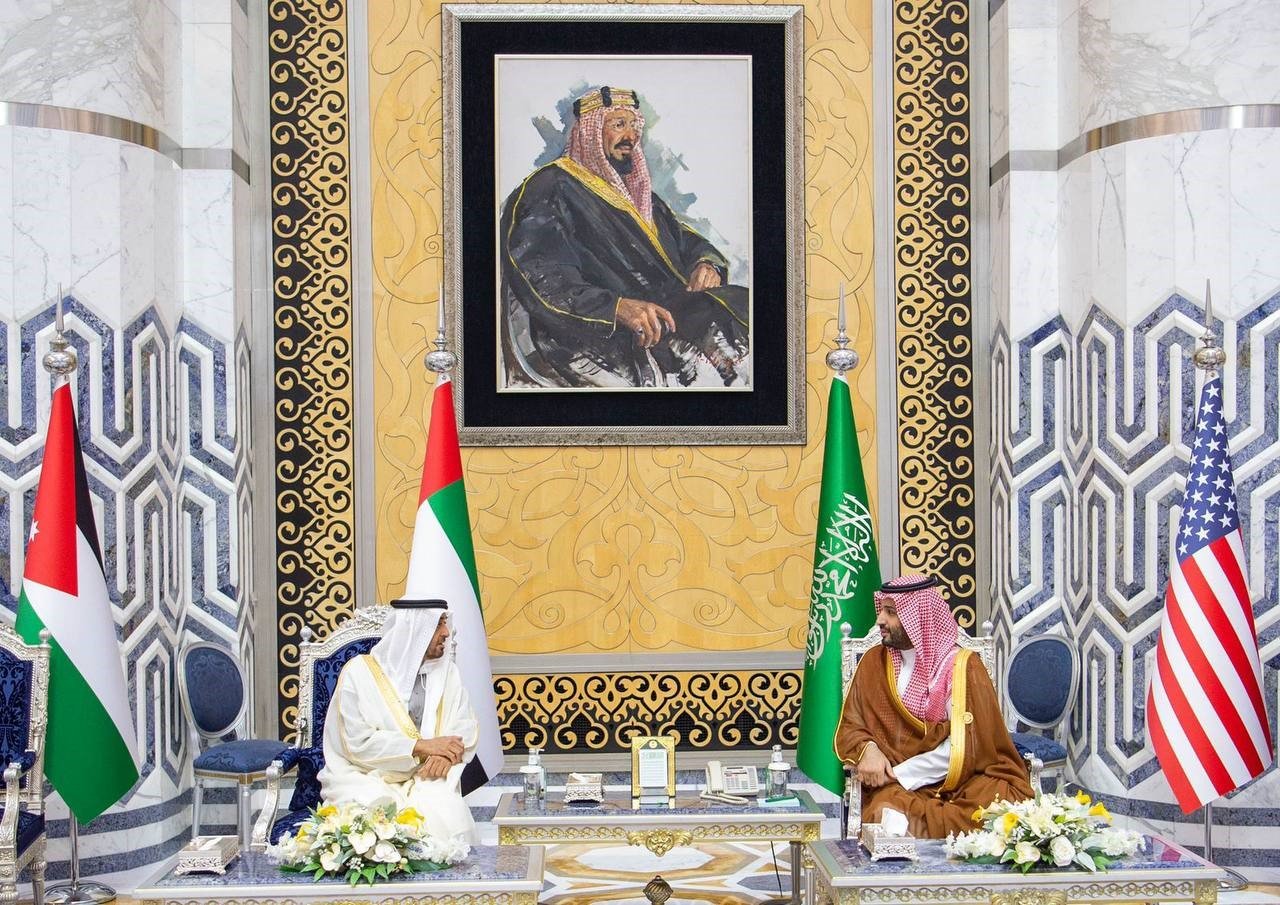
The Makkah Joint Defence Agreement (MJDA), signed by Saudi Arabia, Türkiye and Pakistan on 7 August, matters less for having already taken a step towards creating a “Muslim NATO” than for capturing a profound shift in West Asia’s strategic psychology. Its central pledge — that an armed attack on one signatory will be regarded as an attack on all three — evokes NATO’s Article 5, while subsequent explanations envisage political-military mechanisms, joint exercises and cooperation in advanced defence technologies. Yet the agreement remains deliberately elastic: the form of assistance would be politically determined, and its members insist that it is defensive and compatible with existing alliances.
For the United Arab Emirates, the agreement poses neither an immediate threat nor an uncomplicated opportunity. Abu Dhabi has so far avoided a conspicuous official reaction. Its deeper concern is whether the pact remains part of a diversified Gulf security network or evolves into a Saudi-centred institution in which Türkiye and Pakistan become indispensable military partners, while the Emirates remains outside its core.
That distinction matters because the UAE has spent two decades converting financial weight into strategic autonomy. It does not seek confrontation with Saudi Arabia, but it also does not favour a Gulf order in which Riyadh alone sets the terms. The two countries remain deeply interconnected, yet differences over Yemen, oil policy and regional influence reveal structural competition. Abu Dhabi’s instinct is to preserve freedom of action, even when doing so complicates relations with close partners.
At the same time, the UAE can see advantages in what the agreement seeks to accomplish. The Iran war, attacks on Gulf states and disruption in the Strait of Hormuz have exposed the dangers of relying on any single external protector. The MJDA members bring complementary assets: Saudi finance and geography, Turkish defence technology and NATO experience, and Pakistani manpower, military experience and nuclear status. Even if the collective-defence clause proves more political than automatic, cooperation in intelligence, air defence, exercises and defence production could strengthen regional resilience.
The Turkish dimension is less threatening to Abu Dhabi than it would have been several years ago. The UAE and Türkiye have moved from ideological rivalry to pragmatic engagement, allowing Ankara to be both a competitor and a partner. Pakistan presents a different calculation. Abu Dhabi has longstanding ties with Islamabad and little reason to view its participation solely through the lens of the India-Pakistan rivalry. More consequential is whether Saudi capital, Turkish technology and Pakistani military capacity gradually acquire institutional coherence. If they do, the MJDA could evolve into a new centre of regional strategic gravity.
This prospect gives Abu Dhabi an additional reason to deepen other relationships, particularly with India and Israel, but it would be misleading to assume that the UAE will answer one triangle by creating another. Its preferred model is not counter-alliance but portfolio diversification. The expanding strategic defence partnership with India spans defence industry, technology, training, and maritime security. India offers economic scale and Indian Ocean reach without directly entangling Abu Dhabi in intra-Arab competition.
Israel offers a different strategic utility. The Iran war has demonstrated that the Abraham Accords have a security dimension that extends beyond diplomacy and commerce. Yet closer UAE-Israel cooperation is likely to remain calibrated. An overt UAE-India-Israel counter-bloc would antagonise Saudi Arabia and Türkiye, heighten Iranian suspicions and carry political costs because of the Palestine issue. A recognisably Emirati strategy would instead combine Israeli air and missile defence and intelligence, Indian maritime and technological cooperation, American high-end capabilities, Turkish defence commerce, GCC coordination and channels with Tehran.
Iran will view this emerging network with considerable ambiguity. Tehran has publicly said it has no reason to fear the MJDA and has portrayed it as evidence that regional states are increasingly relying on their own capabilities rather than on extra-regional powers. This aligns with Iran’s longstanding call for an indigenous Gulf security architecture. The paradox is that something resembling that architecture is now emerging without Iran at its centre — and potentially without Iran in it at all.
The danger for Tehran is cumulative rather than formal. The MJDA, deeper UAE-Israel security cooperation, expanding UAE-India ties, continued American deployments, and Saudi-led maritime initiatives could collectively resemble layered containment, even if none is officially anti-Iranian. Tehran therefore has every incentive to prevent the pact from hardening into such a bloc, especially because Pakistan and Türkiye share borders and important interests with Iran and have little enthusiasm for automatic involvement in a direct Saudi-Iranian conflict.
Trump changes the equation
President Donald Trump’s exceptionally positive reaction complicates the argument that the Makkah agreement signals an anti-American revolt or the collapse of the U.S. security system. He welcomed the MJDA as evidence that the Middle East was “coming together” and as an important step towards regional countries defending themselves more meaningfully. Washington is therefore not resisting an autonomous regional defence mechanism; it is applauding it.
Nevertheless, a strong case remains that the old U.S.-led regional order is coming to an end. For decades, it rested on American military primacy, the protection of energy flows, support for Israel, and security partnerships that gave Washington disproportionate influence over Arab strategic choices. Iraq, Syria, the restrained response to the 2019 attacks on Saudi oil facilities, and repeated shifts towards Iran have eroded confidence in American constancy. The MJDA is different because major U.S. partners are beginning to build mechanisms to organise parts of the regional balance themselves.
Trump’s endorsement, however, suggests that the American order may be decentralising rather than disappearing. Washington has long urged allies to shoulder more of their own defence. Turkish capabilities, Pakistani manpower and Saudi financing can help share the burden that Washington might welcome. The United States can tolerate greater strategic autonomy while retaining influence through bases, intelligence, logistics, advanced weapons and technology.
The result could be a paradox: a regional security system becoming less American-led while remaining partly American-enabled. This is especially relevant to the UAE, which has no reason to choose between American protection and regional autonomy if it can have both. Yet as regional governments develop alternative military relationships, defence industries and diplomatic channels, their dependence on Washington declines. What is weakening, therefore, is not U.S. power so much as Washington’s near monopoly on organising regional security.
Not two blocs, but overlapping networks
There is a temptation to imagine the emerging Middle East splitting into two camps: an Abraham Accords constellation comprising the UAE, Israel, India and the United States, and a Makkah constellation comprising Saudi Arabia, Türkiye and Pakistan. Such a bipolar structure is conceivable, particularly if disagreements over Israel, Palestine, Iran and regional connectivity intensify. But the UAE itself shows why a neat bipolar division is improbable.
Abu Dhabi can cooperate with Israel and India, maintain pragmatic ties with Türkiye and Saudi Arabia, retain security ties with the US, trade with China, use Russia as an intermediary, and preserve channels with Iran. The emerging order is therefore more likely to consist of overlapping networks than of opposing alliances.
China will gain influence through its economic weight and ties with both Iran and the Arab Gulf, but remains reluctant to assume binding security obligations. Russia has a narrower role as an intermediary and energy partner and lacks the resources to become the Gulf’s principal security guarantor. India is likely to become increasingly important because it combines economic scale, technology, an expanding defence industry, and Indian Ocean reach, without seeking political hegemony in the Arab world.
Abu Dhabi’s likely response
The MJDA thus presents the UAE with both a challenge and an opportunity. If it becomes an exclusive Saudi-led bloc, Abu Dhabi is likely to hedge more vigorously by engaging with India, Israel, the United States and other partners. If it remains flexible and complementary to GCC arrangements, the UAE may cooperate selectively without necessarily joining. What Abu Dhabi is unlikely to accept is a security architecture that requires political subordination to Riyadh or dependence on any single patron.
The Makkah agreement does not herald a finished “New World Order”, but it does illuminate an emerging regional order built around minilateral coalitions and overlapping partnerships. Trump’s welcome suggests that regional autonomy and continued American engagement need not be mutually exclusive at the outset: Washington may preserve influence while relinquishing some responsibility, while Gulf states remain close to it while building alternatives to dependence.
Abu Dhabi is well adapted to this environment. Its instinct is not to choose one patron but to make itself valuable to several simultaneously. The agreement will therefore reinforce rather than overturn the UAE’s existing trajectory: deeper defence ties with India, calibrated cooperation with Israel, pragmatic relations with Türkiye, managed competition with Saudi Arabia, continued access to American military power, economic engagement with China, selective diplomacy with Russia, and deterrence towards Iran, tempered by dialogue.
The age of the single American security umbrella is not yet over. The age of American exclusivity probably is. What is replacing it is a networked, multipolar regional order, in which the UAE intends not merely to find a place but to become one of its principal architects.
The article first appeared in India’s World and can be accessed here.
