

Population Size
-
- West Asia has an estimated population of 460 million people (2024).
- The largest country by population in the region is Egypt with over 109 million people.
Oil Reserves
- West Asia holds approximately 48% of the world’s proven oil reserves.
- Saudi Arabia alone holds around 17% of global oil reserves, with about 266 billion barrels of proven reserves.
World’s Tallest Building
- The Burj Khalifa in Dubai, UAE, is the tallest building in the world at 828 meters (2,717 feet) with 163 floors.
Religious Significance
- Islam, which originated in the Middle East, is practiced by approximately 94% of the region’s population.
- Over 1.9 billion Muslims globally consider Mecca in Saudi Arabia the holiest city in Islam.
- The annual Hajj pilgrimage to Mecca in Saudi Arabia attracts over 2 million pilgrims from around the world every year.
Largest Desert
- The Rub’ al Khali (Empty Quarter) in Saudi Arabia is the largest continuous sand desert in the world, covering an area of 650,000 square kilometers (250,000 square miles).
GDP
- The combined GDP of West Asia is approximately $4.0 to $5.0 trillion (2023 estimates).
- Saudi Arabia, Turkey, and the UAE are the largest economies in the region, with Saudi Arabia leading at $1.06 trillion.
- The richest country per capita in the region is Qatar, with a GDP per capita of around $60,000.
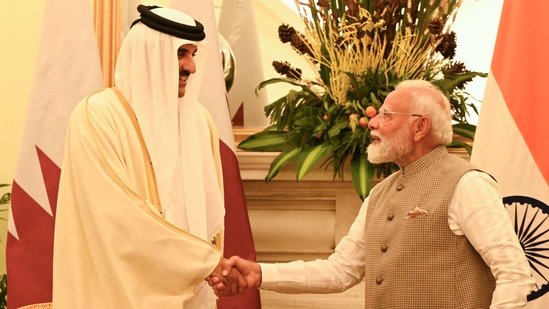
Delhi-Doha engagement looks beyond energy trade
The India-Qatar relationship has evolved into a multifaceted strategic partnership encompassing security and defence cooperation, health care and education. The India-Qatar relationship illustrates how countries can overcome crises and challenges through pragmatic diplomacy, economic interdependence, and strategic patience.

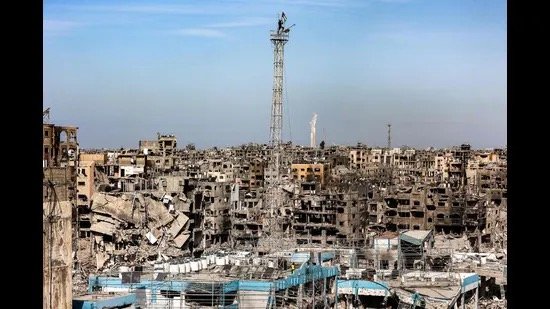
Truce to Peace, the Challenge in Gaza
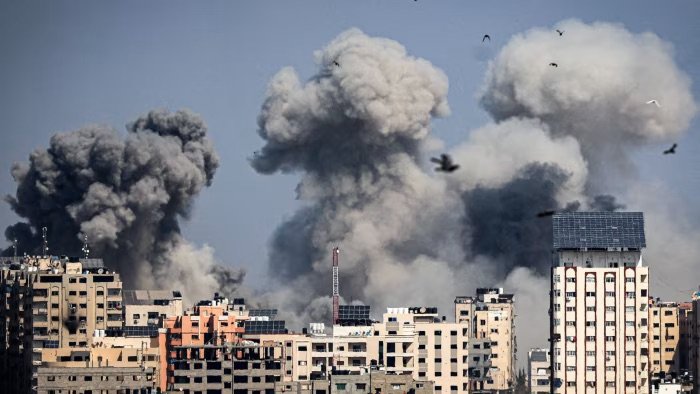
After fifteen months of devastating conflict, Israel and Hamas have reached a ceasefire deal that aims to stop violence in Gaza and facilitate the release of hostages. The agreement, brokered by Qatar, Egypt, and the United States, marks a significant turning point in the long-standing Israeli-Palestinian conflict and raises hopes for lasting peace in the Middle East.
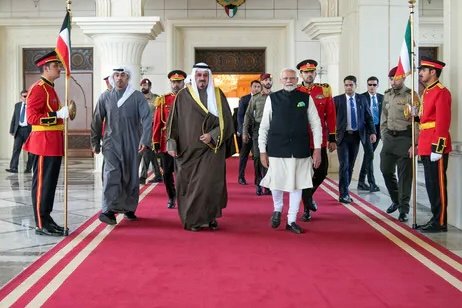
Why Delhi is building bridges with the Gulf
The changing geopolitical landscape, marked by a perceived US rebalancing, Russia’s setbacks in Syria, and a weakened Iran juxtaposed with a strengthened Israel, offers new opportunities for a stronger India-GCC strategic partnership to play a more proactive role in regional stability.
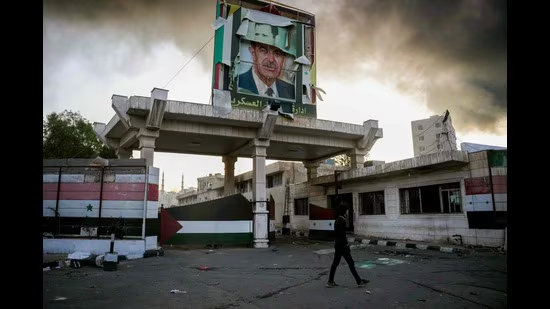
Arab Spring in Syria Marks a Power Shift
The collapse of the Assad regime has far-reaching consequences. There is genuine fear that Syria could become a safe haven for extremist groups. The collapse of Assad’s regime represents a seismic shift in Middle Eastern geopolitics with far-reaching consequences. It significantly affected Russia and Iran’s influence in the region, severely weakening and disrupting Iran’s “Axis of Resistance.”
The Middle East Needs a Healing Touch
Interestingly, foreign policy issues, predominantly the ongoing conflicts in the Middle East involving Israel and Iran and its proxies—Hamas, Hezbollah, and Houthis—played a significant role in shaping the outcome of the US presidential elections, especially in close races. Trump actively courted the Arab and Muslim voters, mainly in Michigan, through personal community interactions, projecting himself as a ‘peacemaker’ and promising to end the war in Gaza.
Stay in touch
Subscribe to our blog for insightful updates, expert analyses, and in-depth stories on politics, culture, economics and innovation across West Asia. Don’t miss out—be the first to know what’s shaping the region today!