
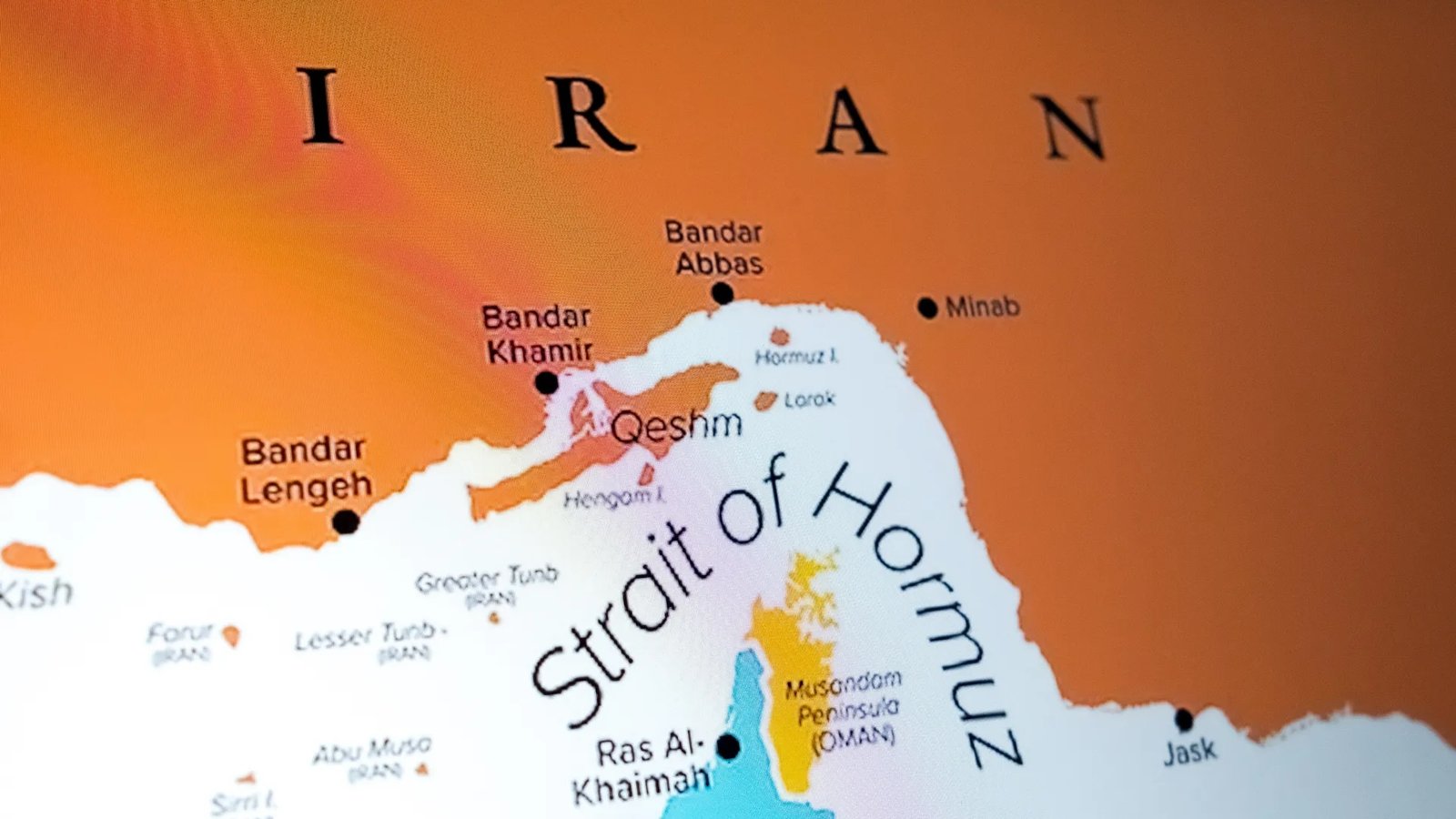
Only 2 Gulf states can pipe oil around Hormuz. Saudi Petroline is maxed at 7 mb/d; the UAE’s new Fujairah line won’t double capacity until 2027. Kuwait, Iraq, and Qatar have no exit — and LNG has none at all.
For half a century, the Strait of Hormuz was the quiet hinge of the global economy — a narrow channel between Oman and Iran through which roughly a fifth of the world’s oil moved without a second thought. The war of 2026 has ended that complacency. With the strait effectively closed since the opening strikes of late February, the question is no longer whether Hormuz matters, but who governs it, and whether the world can ever again afford to depend on it. Out of that disruption, however, has come something useful: the first serious, well-capitalised effort in a generation to build both durable rules for the strait and physical alternatives to it.
The scale explains the stakes. In 2025 the strait carried about 20 million barrels of crude and products a day — close to a fifth of global petroleum consumption and roughly a quarter of all seaborne oil trade, according to the International Energy Agency and the US Energy Information Administration. Some 84 per cent of that crude was bound for Asia; China, India, Japan and South Korea alone took nearly seven-tenths of it. Just as critically, more than nine-tenths of Qatar’s and the UAE’s LNG — about a fifth of the global gas trade — passes through the same channel. No waterway concentrates so much of the world’s energy in so little water.
Three models for managing the strait are now contending. The first is the status quo ante: free and unconditional transit as a right, not a privilege, under the transit-passage regime of the UN Convention on the Law of the Sea. This is the position the United States, the Gulf Cooperation Council and the European Union have restated, most recently in a joint EU–GCC statement in Brussels affirming that passage through Hormuz is guaranteed under international law and cannot be suspended or made conditional by any single state. The second is the Iranian model — an assertion of regulatory control through a newly created transit authority, a designated channel hugging Iran’s coast, and, at the close of a negotiating window, passage fees. Gulf governments and maritime lawyers have called such tolls illegal and unenforceable, and the reported figures — as high as $2 million a ship in some accounts — remain contested and officially disputed.
Between these lies a third, more promising path that the crisis has quietly surfaced: a cooperative, burden-sharing arrangement modelled on the Straits of Malacca and Singapore. There, under Article 43 of UNCLOS, the three littoral states and the wider shipping world operate a Cooperative Mechanism — a dialogue forum, a project committee and, crucially, an Aids to Navigation Fund financed by voluntary contributions from user states and bodies such as Japan’s Nippon Foundation. Reports that the June memorandum floated a voluntary toll “modelled on the Malacca–Singapore Straits” point precisely here. But the distinction that sank those talks is the one that matters: Malacca works because contributions fund safety and are voluntary, not because transit is taxed. A Hormuz mechanism could fairly share the cost of surveillance, mine-clearance and escort — but only if it were decoupled from any claim of sovereign control. That it also requires cooperative rather than adversarial littoral states is the harder problem.
If the rules remain unsettled, can states simply route around Hormuz? Partly — and only two of them can do so overland today. The EIA notes that Saudi Arabia and the UAE alone possess working bypass pipelines. Saudi Arabia’s East–West line, the Petroline, has been pushed to its physical ceiling of 7 million barrels a day, in part by converting parallel gas lines to crude service; but around 2 million barrels feed domestic refineries, and the Red Sea port of Yanbu can load only so much, so the route covers perhaps half to two-thirds of the kingdom’s pre-war exports. Aramco has confirmed the line is already at its maximum, with no further expansion possible. The UAE’s Habshan–Fujairah pipeline moves up to 1.8 million barrels a day to the Gulf of Oman, and Abu Dhabi is racing to change the arithmetic: its new West–East 1 line, which ADNOC chief Sultan Al Jaber says is about half-built and due in 2027, would roughly double Fujairah’s export capacity — a bet reinforced by the UAE’s exit from OPEC and its push toward 5 million barrels a day.
The limits are stark. Kuwait, Iraq, Qatar and Bahrain have no overland option at all; their exports simply stop when Hormuz stops. Egypt’s SUMED line can carry Saudi barrels onward from the Red Sea to the Mediterranean, but only after they survive the Bab el-Mandeb, itself under Houthi threat — trading one chokepoint for another and adding insurance and freight costs that erode any saving. Proposed corridors — an Iraqi line to Aqaba, Basra-to-Mediterranean routes, the multimodal India–Middle East–Europe Economic Corridor (IMEC) — are years and tens of billions of dollars away. And for LNG there is no bypass at all: gas has no Petroline. “Cost-effective” evasion of Hormuz, in short, is real but partial, crude-heavy and capital-intensive.
For India, which imports close to 85 per cent of its crude and long drew a large share of it through the Gulf, the lesson is neither panic nor complacency but positioning. New Delhi has already diversified toward Russian, American and West African barrels, and its stake in the Fujairah corridor, its storage arrangements with ADNOC and its anchoring role in IMEC give it a genuine hedge — and a seat at the table where a durable regime will be written.
That, ultimately, is the conundrum’s resolution. Neither total bypass nor unilateral control is achievable: the infrastructure cannot fully replace the strait, and no single power can lawfully own it. The realistic prize is a cooperative navigation framework, consistent with the law of the sea and backed by the states that depend on the waterway. The war has been costly, but it has also built the pipelines, forged the coalitions and concentrated the minds needed to make Hormuz less of a single point of failure. The task now is to convert that hard-won momentum into arrangements that outlast the crisis.
